Information
Landmark: Castle of TurnhoutCity: Turnhout
Country: Belgium
Continent: Europe
Castle of Turnhout, Turnhout, Belgium, Europe
Overview
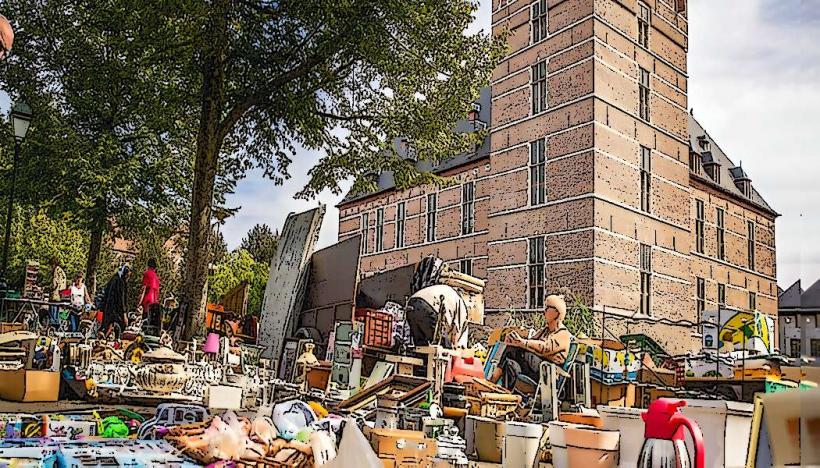
The Castle of Turnhout, known locally as Kasteel van Turnhout, stands in the heart of Turnhout, a town in Antwerp province, Flanders, Belgium, in conjunction with this landmark stands out in the region, rich with history and offering a glimpse into the area’s medieval past-like the worn grooves still visible on its stone steps.Over the centuries, the castle has seen battles flare on its walls and heard celebrations echo through its halls, changing in both design and purpose with each recent era, as a result the Castle of Turnhout traces its roots to the 12th century, though people may have fortified the site even earlier, when its stone walls first caught the morning light.Perched along the Nete River, its position helped shape it into a defensive stronghold, since Turnhout was a key town in the region during medieval times, therefore the castle first appears in records from the 12th century, likely built by a local noble family whose crest still fades on the weathered stones.At first, it stood as a fortified manor where the lords of Turnhout and their entourages lived, its stone walls echoing with the clatter of hooves in the courtyard, in turn over the centuries, it changed hands among noble families, from the dukes of Brabant to the house of Nassau.The castle wasn’t only a noble’s home; it loomed like a fortress, its stone walls built to withstand an army, on top of that it was a key player in regional politics, especially during the turbulent struggles of the Low Countries in the Middle Ages.In the 16th century, when the Habsburgs ruled the region, the castle saw major renovations-current stone walls rising where heritage ones had crumbled, along with the castle took on a Renaissance gaze after a modern gatehouse rose at its entrance and the walls were reinforced.By the 19th century, ivy crept over crumbling stones as much of the structure was dismantled or reshaped, on top of that the building was eventually preserved and restored-much of that work done in the 20th century-and today its doors stand open to visitors.The Castle of Turnhout blends sturdy medieval stonework with elegant Renaissance flourishes, a mix that tells the story of centuries of change, likewise fortifications: The castle began as a fortress, ringed with thick stone walls, a deep moat, and a creaking wooden drawbridge.Though many original features have changed or vanished, you can still spot traces of the medieval walls, furthermore the main building stands tall, anchored by a massive square tower that once formed part of the castle’s defenses.The castle’s tower stands out as its most iconic feature, offering sweeping views over the red rooftops, winding streets, and rolling hills beyond, in addition in the 16th century, it was renovated in the Renaissance style, with elegant facades, tall arched windows, and perfectly balanced symmetry.Just so you know, These features show how aesthetics gained importance in that era, even as military needs shaped the design, as well as inside, the castle’s rooms have been refurbished for modern exhibitions, yet you can still witness echoes of its noble past-dusky oak paneling, stone fireplaces, and ornate ceilings.Today, the Castle of Turnhout hosts a range of events and remains one of the town’s main draws, likewise inside the castle, you’ll find the Taxandria Museum, where exhibits trace Turnhout’s history and showcase the region’s rich cultural heritage, from worn leather book covers to centuries-ancient maps.At the castle, visitors can dive into Turnhout’s medieval and Renaissance past, discover how the fortress once shaped the region, and trace the town’s growth over centuries, subsequently today, its halls echo with music, art, and laughter during exhibitions, concerts, and lively festivals.Not surprisingly, The castle’s historic charm and postcard-worthy views make it a favorite spot for weddings, festivals, and other public gatherings, and it also draws countless tourists exploring Turnhout, equally important the city’s deep history, paired with its lively role as a cultural hub, draws visitors in-like the scent of fresh bread drifting from a market stall.You can join a guided tour to wander through the castle’s halls, hear its centuries-heritage stories, and explore the streets that wrap around it, to boot the Castle of Turnhout stands as a proud landmark, deeply woven into the cultural and historical fabric of Flanders, perhaps It stands as a reminder of Turnhout’s medieval roots, and of how the town grew into a key hub in the region, much like the worn stone streets that still echo with history, furthermore the castle stands as a bold reminder of the noble families who once ruled here, its stone walls echoing their power and authority, occasionally It’s a vital chapter in the history of the Duchy of Brabant and, later, the Habsburg lands, with the castle standing at the heart of Turnhout’s cultural heritage-its worn stone walls still holding centuries of stories, on top of that at the Taxandria Museum, you can wander through centuries of local history-step into the town’s medieval role, admire its centuries-ancient brickwork, and perceive how it fit into the wider European story.Today, the castle still buzzes with life, drawing people in for concerts, art fairs, and lively festivals that fill its courtyard, to boot the Castle of Turnhout remains a treasured landmark, offering a vivid window into Belgium’s medieval past.The castle blends towering medieval walls with graceful Renaissance details, making it a vital piece of the region’s architectural story, besides as both a museum and a cultural hub, it stays vital to learning and leisure, pulling in locals and travelers alike to wander its echoing halls and soak up its lively history and arts.Whether you’re drawn to its rich history, striking architecture, or just the quiet charm of its stone courtyard, the Castle of Turnhout is a must-observe in the region.
Author: Tourist Landmarks
Date: 2025-08-27